


Choosing Your Perfect Diamond
Understanding the 4Cs — Color, Clarity, Cut, and Carat — is the foundation of every great diamond decision.
The universal method for assessing the quality of any diamond — developed by GIA and used by jewelers and gemologists worldwide. Each of the 4Cs plays a distinct role in a diamond's beauty, rarity, and value.
Diamond Color
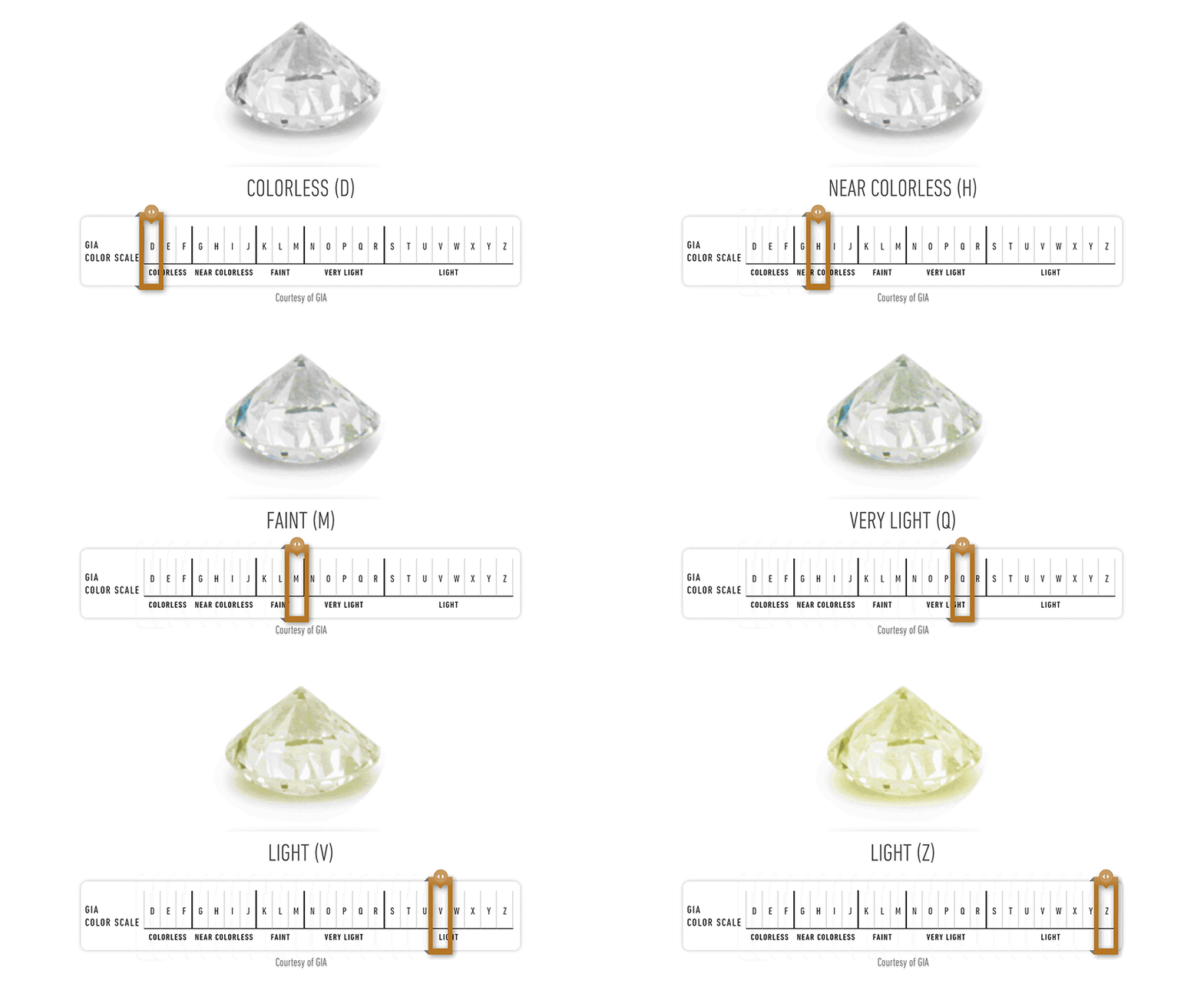
Diamond color actually means a lack of color. A chemically pure and structurally perfect diamond has no hue — like a drop of pure water — and consequently commands a higher value. GIA's D-to-Z diamond color-grading system measures the degree of colorlessness by comparing a stone under controlled lighting and precise viewing conditions to masterstones of established color value.
GIA's D-to-Z color-grading scale is the industry's most widely accepted grading system. The scale begins with the letter D, representing colorless, and continues with increasing presence of color to the letter Z. Many of these color distinctions are so subtle they are invisible to the untrained eye — yet they make a very big difference in diamond quality and price.
Fun Fact: Color is the only factor not determined by examining the table or top-down perspective. Diamonds are graded for color by placing them upside down on a pure white piece of paper.
Diamond Clarity
Diamond clarity refers to the absence of inclusions and blemishes. Natural diamonds are the result of carbon exposed to tremendous heat and pressure deep in the earth. This process can result in a variety of internal characteristics called inclusions and external characteristics called blemishes.
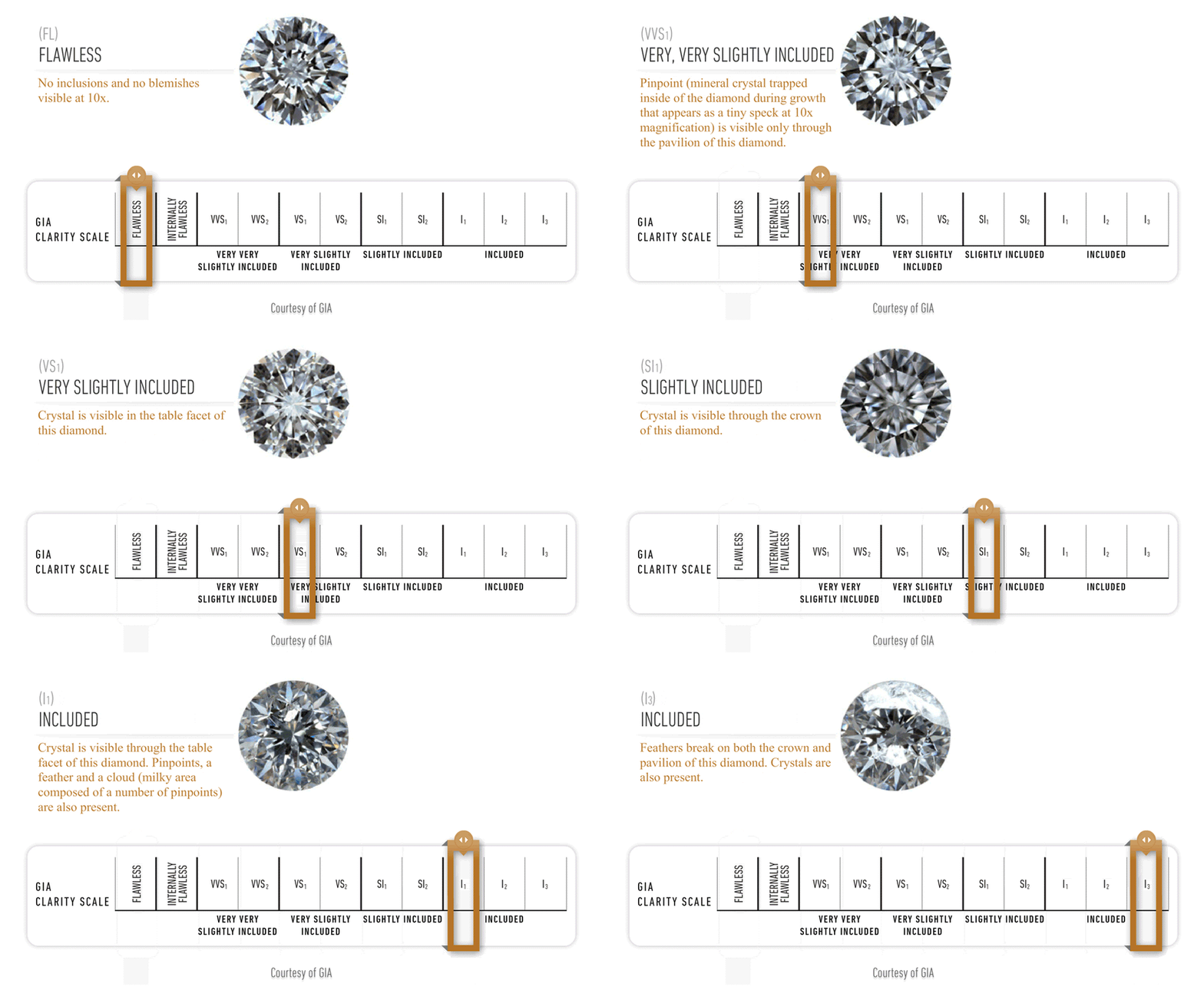
The GIA Diamond Clarity Scale has 6 categories — some divided — for a total of 11 specific grades.
- FL — FlawlessNo inclusions and no blemishes visible under 10x magnification.
- IF — Internally FlawlessNo inclusions visible under 10x magnification.
- VVS1 & VVS2Inclusions so slight they are difficult for a skilled grader to see under 10x magnification.
- VS1 & VS2Inclusions observed with effort under 10x magnification but characterized as minor.
- SI1 & SI2Inclusions are noticeable under 10x magnification.
- I1, I2 & I3Inclusions are obvious under 10x magnification and may affect transparency and brilliance.
Diamond Cut
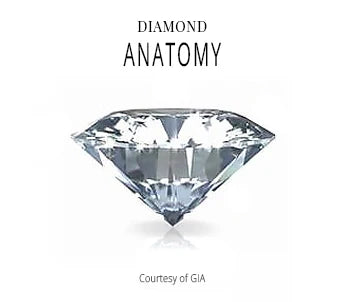
A diamond's cut unleashes its light. Diamonds are renowned for their ability to transmit light and sparkle so intensely. We often think of a diamond's cut as shape — round, emerald, pear — but a diamond's cut grade is really about how well its facets interact with light.
Precise artistry and workmanship are required to fashion a stone so its proportions, symmetry, and polish deliver the magnificent return of light only possible in a diamond. Of all the 4Cs, cut is the most complex and technically difficult to analyze.
Brightness
Internal and external white light reflected from a diamond — the foundation of its luminosity.
Fire
The scattering of white light into all the colors of the rainbow — the prismatic effect that makes diamonds magical.
Scintillation
The amount of sparkle a diamond produces and the pattern of light and dark areas caused by reflections within the diamond.
GIA's diamond cut grade also takes into account the design and craftsmanship of the diamond, including its weight relative to its diameter, its girdle thickness, the symmetry of its facet arrangement, and the quality of polish on those facets. The GIA Diamond Cut Scale for standard round brilliant diamonds contains 5 grades ranging from Excellent to Poor.
Diamond Carat
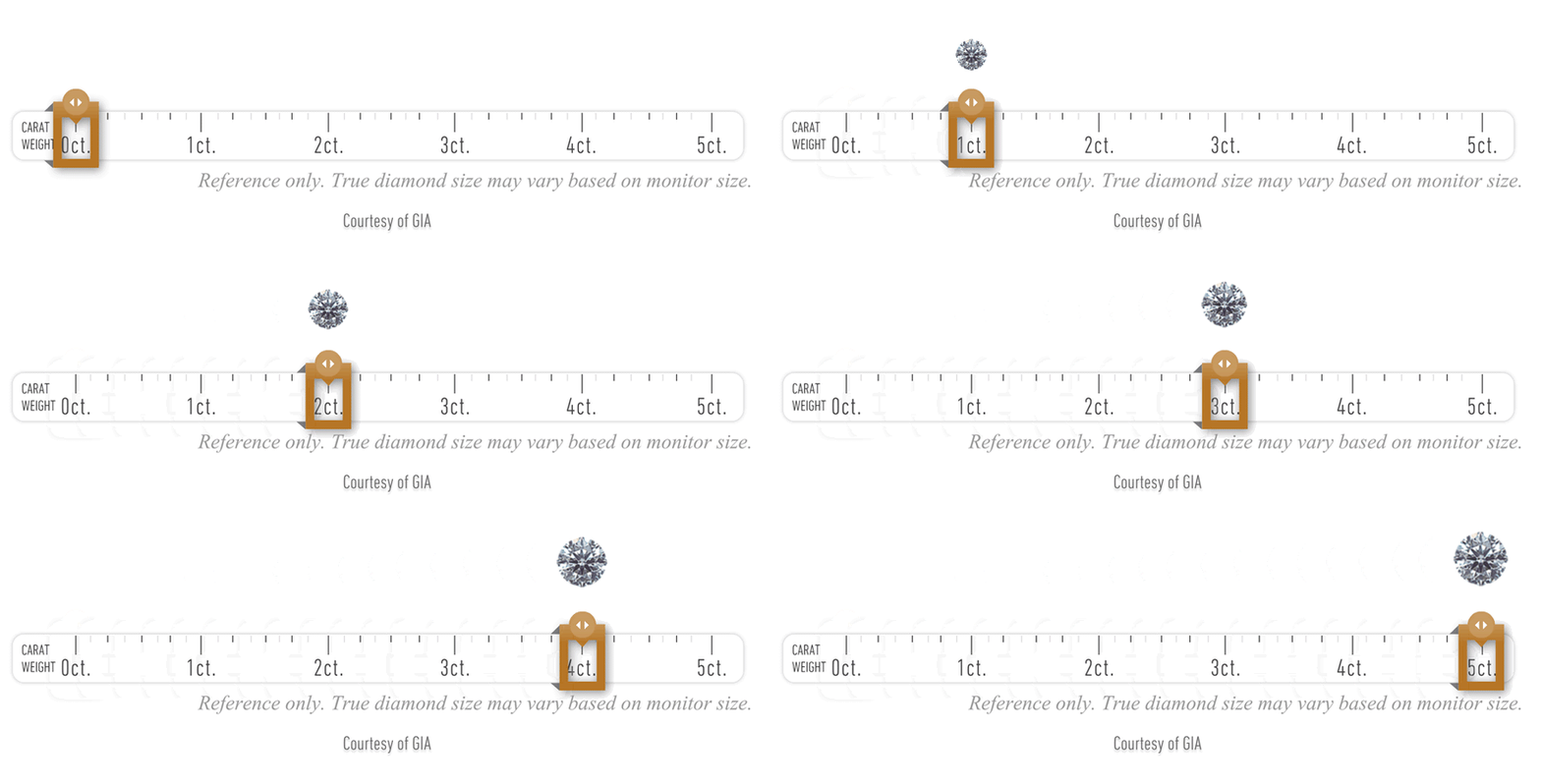
Diamond carat weight is the measurement of how much a diamond weighs. A metric carat is defined as 200 milligrams. Each carat can be subdivided into 100 points, allowing very precise measurements to the hundredth decimal place.
A jeweler may describe the weight of a diamond below one carat by its points alone. For instance, a diamond that weighs 0.25 carats may be called a "twenty-five pointer." Diamond weights greater than one carat are expressed in carats and decimals — a 1.08 carat stone would be described as "one point oh eight carats."
Important: Carat weight does not determine beauty. Two diamonds of equal carat weight can have very different values depending on their color, clarity, and cut grade.
Let Our Experts Guide You
Our team is here to help you apply the 4Cs to find the perfect diamond for your moment. Book a personal consultation at any of our four Indiana locations.
Book an Appointment Shop Engagement Rings